
🎄 Win a month in Italy for two — €10,000 · The Secret Italy Prize GO →
← Back

The Church of St. John the Evangelist in Rome

The Church of St. John the Evangelist in Rome — Roma, Italia.

Via di Porta Latina, 00179 Roma RM, Italia ★★★★☆ 174 views
Giovanna Pascoli
Roma
🏆 AI Trip Planner 2026

Get the free app

Discover the best of Roma with Secret World — the AI trip planner with 1M+ destinations. Get personalized itineraries, hidden gems and local tips. Free on iOS & Android.

🧠 AI Itineraries 🎒 Trip Toolkit 🎮 KnowWhere Game 🎧 Audio Guides 📹 Videos
Scan to download iOS / Android
Scan for AppGallery Huawei users

About The Church of St. John the Evangelist in Rome

The Church of St. John the Evangelist in Rome - Roma | Secret World Trip Planner

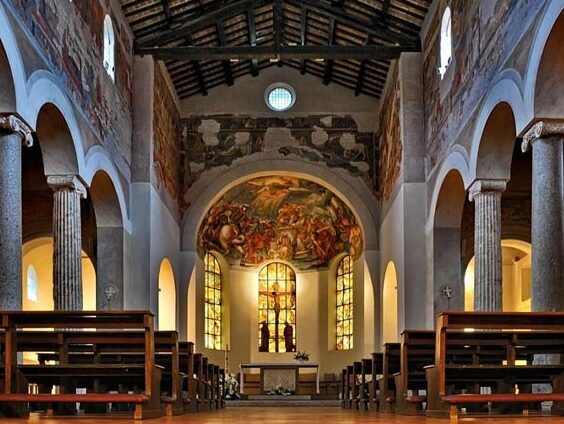
The Church, dedicated to St. John the Evangelist, is located at the end of the Celio district. It was founded in the 5th century, rebuilt in 720 and restored in 1191, with the addition of a new bell tower with six orders of three-light windows and a new cycle of frescoes with as many as 46 biblical scenes. The important cycle, recently restored, represents, together with the Gothic Hall in the Monastery of Santi Quattro Coronati, one of the greatest examples of medieval painting in the Capital. Between the 16th and 17th centuries, the Church was enriched by a new apse fresco on cardboard by Cavalier d'Arpino. The medieval portico and the aisles are supported by columns which, according to legend, belonged to a temple of Diana. In the second half of the 16th century, a secret circle was established at the Church, within which homosexual ties of affection were manifested and marriage bonds were consecrated according to the ecclesiastical liturgy. The confraternity was dissolved in 1578, inflicting the penalty of hanging on all members.


🗺 Die smarte Trip-Planner-App 🎄 Win a month in Italy — €10,000 →

Plan your visit to Roma

Suggested itinerary near The Church of St. John the Evangelist in Rome

MAJ+
500.000+ travelers worldwide
  1. 🌅
    Morning
    The Church of St. John the Evangelist in Rome
    📍 Roma
  2. ☀️
    Afternoon
    The Basilica of Saints Nereus and Achilles
    📍 0.8 km · Roma
  3. 🌆
    Evening
    Codex Vaticanus: one of the oldest Bible's manuscripts
    📍 1 km · Roma

Buy Unique Travel Experiences

Powered by Viator

See more on Viator.com

Explore nearby · Roma

Frequently Asked Questions

The Church was originally founded in the 5th century, then rebuilt in 720, and underwent major restoration in 1191 with the addition of a new bell tower and an extensive cycle of 46 biblical frescoes. Between the 16th and 17th centuries, it was further enriched with new apse frescoes by Cavalier d'Arpino, making it a layered example of religious architecture spanning over 1,500 years.
The Church is situated at the end of the Celio district, one of Rome's historic neighborhoods. This location makes it easily accessible to visitors exploring the archaeological and medieval sites in the southeastern part of the city center.
The Church features an important recently-restored cycle of frescoes depicting 46 biblical scenes, which ranks among the greatest examples of medieval painting in Rome alongside the Gothic Hall in the Monastery of Santi Quattro Coronati. The medieval portico and aisles are supported by ancient columns that legend claims belonged to a temple of Diana, adding to its artistic and historical significance.
The Church is notable for its six-story bell tower with three-light windows added during the 1191 restoration, as well as its columns believed to have originated from an ancient temple of Diana. The medieval portico, combined with the later Renaissance apse frescoes, creates a fascinating blend of architectural styles across different centuries.
Between the 16th and 17th centuries, a secret confraternity was formed at the Church where same-sex marriage ceremonies were performed according to ecclesiastical liturgy, making it a historically significant site for LGBTQ+ history. However, the confraternity was dissolved in 1578 with severe consequences for its members, reflecting the religious and social attitudes of that era.