
← Back

Kaiser Wilhelm Memorial Church

Breitscheidplatz, 10789 Berlin, Germany ★★★★☆ 128 views
Rania Bennet
Berlin
🏆 AI Trip Planner 2026

Get the free app

Discover the best of Berlin with Secret World — the AI trip planner with 1M+ destinations. Get personalized itineraries, hidden gems and local tips. Free on iOS & Android.

🧠 AI Itineraries 🎒 Trip Toolkit 🎮 KnowWhere Game 🎧 Audio Guides 📹 Videos
Scan to download iOS / Android
Scan for AppGallery Huawei users

About Kaiser Wilhelm Memorial Church

Kaiser Wilhelm Memorial Church - Berlin | Secret World Trip Planner

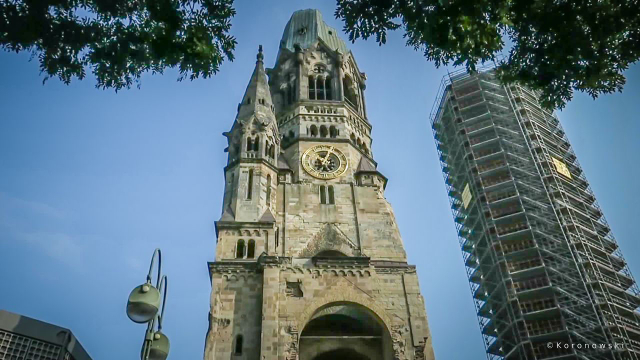
Kaiser Wilhelm Memorial Church is an evangelical temple built in 1895. In honour of Wilhelm I, the first German Kaiser, his grandson Wilhelm II planned a magnificent church, which was built by Franz Schwechten between 1891 and 1895 in the Neo-Romantic style. With five spires, the bombastic design reflected the tastes of the time and that of the Kaiser.
Kaiser Wilhelm Memorial Church - Berlin | Secret World Trip Planner

The church bells were the second biggest in Germany after Cologne, and when the church was inaugurated, the five bells rang so loudly that the wolves in the zoo started howling. During the Second World War, the chimes stopped and the five bells were melted down for munitions.

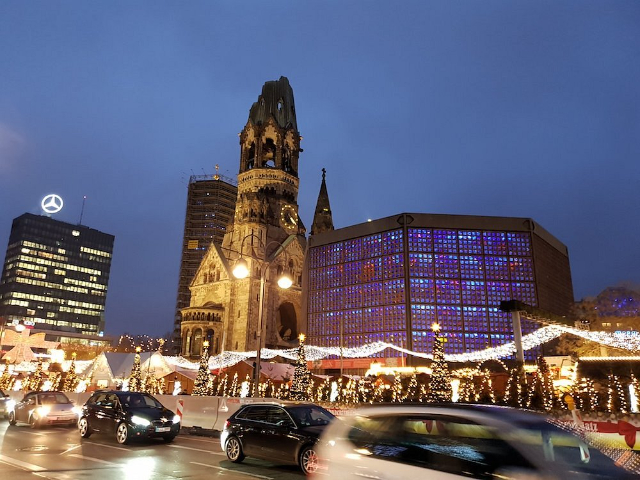
The temple was severely damaged during World War II. The current appearance of the church is a combination of a nineteenth-century ruin with a modern nave on an octagonal plan, a hexagonal bell tower and a four-sided nave and porch, whose walls are made of 30 thousand. glass elements.

The Memorial Church was the work of architect Franz Schwechten, who built a monumental temple with five towers - one of them reached 113 meters and was then the tallest building in Berlin. The church enjoyed great recognition - under its influence the neo-Romanesque style spread throughout Germany.

The modern part of the church was built in 1961 according to the design of Egon Eiermann, one of the most important representatives of German modernism. His concept was to demolish the previous temple. After a stormy social debate, a decision was made to preserve the ruin.


🗺 Die smarte Trip-Planner-App

Plan your visit to Berlin

Suggested itinerary near Kaiser Wilhelm Memorial Church

MAJ+
500.000+ travelers worldwide
  1. 🌅
    Morning
    Kaiser Wilhelm Memorial Church
    📍 Berlin
  2. ☀️
    Afternoon
    Kaiser Wilhelm Memorial Church
    📍 0 km · Berlin
  3. 🌆
    Evening
    Germany | Berlin's Clock
    📍 0.2 km · Berlin

Buy Unique Travel Experiences

Powered by Viator

See more on Viator.com

Explore nearby · Berlin

Frequently Asked Questions

The church was severely damaged during World War II, and while architect Egon Eiermann originally planned to demolish it completely in 1961, a public debate led to the decision to preserve the 19th-century ruin. The modern section was then built alongside it, creating a unique combination of a historic damaged structure with contemporary architecture featuring 30,000 glass elements.
The church originally housed the second-largest bells in Germany, and when the church was inaugurated in 1895, they rang so loudly that wolves in the nearby zoo started howling. During World War II, all five bells were melted down and used for munitions, never to ring again.
Architect Franz Schwechten designed the original church between 1891 and 1895 in the Neo-Romantic style for Kaiser Wilhelm II as a tribute to Wilhelm I. The monumental design featured five spires, with the main tower reaching 113 meters—making it Berlin's tallest building at the time—and its style became so influential that Neo-Romanticism spread throughout Germany.
The church was completed in 1895 as an evangelical temple commissioned by Kaiser Wilhelm II to honor his grandfather Wilhelm I. It stands as a significant monument to late 19th-century German imperial architecture and serves as a powerful WWII memorial, with its preserved damaged structure representing the city's wartime destruction.
The modern nave was designed by Egon Eiermann, a leading modernist architect, and features an octagonal plan with walls made of 30,000 glass elements creating a striking contrast with the preserved Gothic ruin. This bold architectural decision to keep both the old and new side by side makes it one of Berlin's most distinctive religious and historical landmarks.