
← Back

Church of Santa Maria Assunta

Italia ★★★★☆ 133 views
Sara Hoffer
🏆 AI Trip Planner 2026

Get the free app

Discover the best of {city} with Secret World — the AI trip planner with 1M+ destinations. Get personalized itineraries, hidden gems and local tips. Free on iOS & Android.

🧠 AI Itineraries 🎒 Trip Toolkit 🎮 KnowWhere Game 🎧 Audio Guides 📹 Videos
Scan to download iOS / Android
Scan for AppGallery Huawei users

About Church of Santa Maria Assunta

Church of Santa Maria Assunta | Secret World Trip Planner

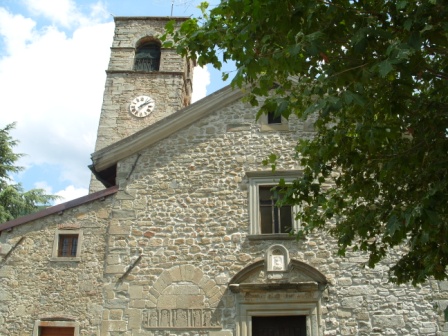
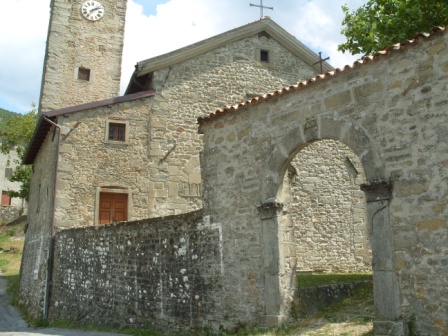
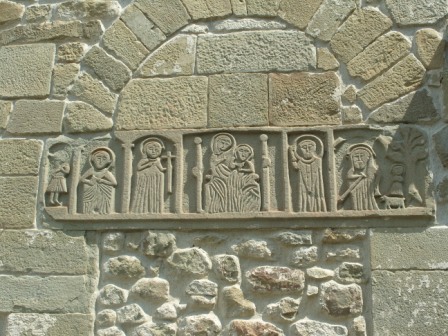
Documents testify its existence since the year 1020. Enlarged and modified during the 18th century, it preserves on the left side of the façade, traces of the original structure: the lunette of the previous door, now walled up, and a 15th century carved sandstone architrave, which is walled up on the left side of the façade, surely the most ancient sculpture of Christian inspiration in Garfagnana. In this bas-relief, scholars have found, from time to time, protoromanesque elements, Byzantine-inspired themes, high expressions of local craftsmanship in stone working in the past centuries. The lintel is divided into six sections, with the Madonna on the throne with the Child Jesus in the center and four saints at the sides. The figure on the left could represent the believer who donated it. The saint in the last square on the right, however, is indicated by all as Sant 'Antonio Abate. The bas-relief came to light, with the fall of the plaster that covered it, only in the '50s.
Church of Santa Maria Assunta | Secret World Trip Planner

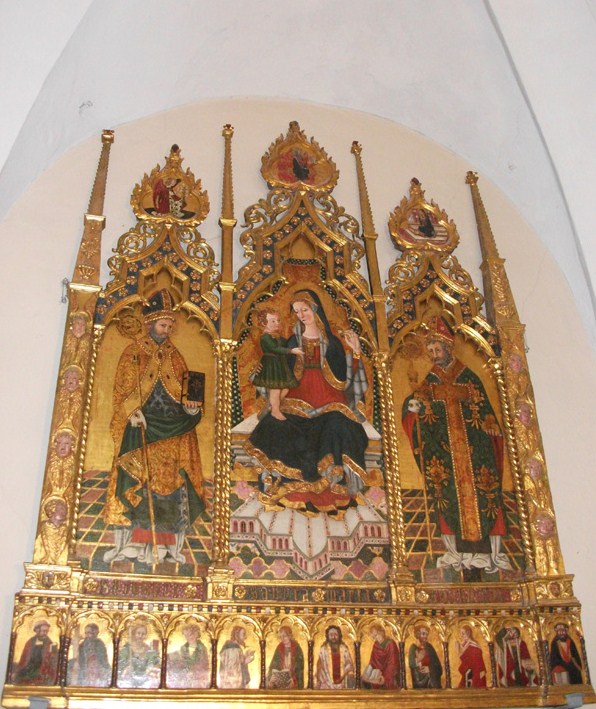
But the work that alone deserves a visit to the church is the Triptych that is behind the high altar. Commonly in Borsigliana the work is called ancona, which derives from the greek-Byzantine eikòna (image) and was made in the second half of 1400 by the Master of Borsigliana, then identified in Pietro da Talada small town in the Apennines of Emilia, in the municipality of Busana of Reggio Emilia. There are several works of this painter in the valley, from Corfino to Camporgiano, up to Stazzema. In the central part of the triptych we have the Madonna seated with the Child in her arms, between San Prospero on the left and San Nicola di Bari (with pomegranate in his hand) on the right. In the predella are represented the twelve Apostles. Above, in the cymas, the archangel Gabriel, God the Father, the Virgin Mary at the moment of the announcement of the Incarnation.
Church of Santa Maria Assunta | Secret World Trip Planner

Buy Unique Travel Experiences

Powered by Viator

See more on Viator.com

Explore nearby

Frequently Asked Questions

The main highlight is the Triptych (called 'ancona' locally) located behind the high altar, created in the second half of the 1400s by Pietro da Talada. This masterpiece features the Madonna with Child in the center, flanked by San Prospero and San Nicola di Bari, with the twelve Apostles depicted in the predella below and scenes of the Annunciation in the upper section.
The church has been documented to exist since 1020, making it nearly 1,000 years old. It was significantly enlarged and modified during the 18th century, though traces of its original medieval structure remain visible on the left side of the façade, including a walled-up lunette and a 15th-century carved sandstone architrave.
The 15th-century carved sandstone architrave on the left side of the façade is considered the most ancient sculpture of Christian inspiration in Garfagnana. Featuring the Madonna on throne with Child Jesus and four saints, it exemplifies protoromanesque and Byzantine-inspired elements and showcases exceptional local stone-working craftsmanship from centuries past.
The bas-relief was discovered in the 1950s when plaster that had covered it fell away, revealing this hidden medieval artwork to the modern world. The relief had been deliberately walled up on the left side of the façade, likely during the 18th-century renovations when the church was enlarged and modified.
Pietro da Talada was the Master of Borsigliana who created the church's famous Triptych in the second half of the 1400s, a small-town artist from the Apennines of Emilia in the municipality of Busana near Reggio Emilia. Several of his other works are scattered throughout the valley in towns including Corfino, Camporgiano, and Stazzema, making it possible to trace his artistic legacy across the region.